NEXT TO NORMAL
- Tracy Payne
- Jul 12
- 4 min read

Sydney Musical Theatre
There are some musicals that are easy to review. Their success can be measured by the precision of the choreography, the beauty of the vocals, or the spectacle of the staging. Next to Normal is not one of them.
Tom Kitt and Brian Yorkey’s Pulitzer Prize-winning musical asks much more of its audience. It explores grief, mental illness and family relationships with an honesty that can be uncomfortable, and perhaps that is why it remains one of the most significant musicals of the twenty-first century. More than fifteen years after its Broadway debut, its themes continue to resonate, particularly as conversations around mental health become increasingly visible and nuanced.
Sydney Musical Theatre’s production approaches the material with sincerity and care. Under the direction of Sarah Shanahan, the focus remains firmly on the human story at the centre of the musical rather than the diagnosis that drives it. This is not a production interested in sensationalising Diana Goodman’s bipolar disorder, instead, it explores the ripple effects of grief and trauma on an entire family, allowing the audience to see how each character wrestles with the same loss in vastly different ways.

At the centre of the production is Izzy Tilden as Diana. It is a role that requires exceptional emotional and vocal stamina, and Tilden delivers a thoughtful and committed performance. Rather than leaning heavily into the more dramatic aspects of the character, Tilden allows Diana’s vulnerability to emerge gradually. The quieter moments often prove the most effective, creating a portrait of a woman desperately trying to reconcile her memories with her reality.

Simon Donovan brings both gravitas and emotional depth to Dan Goodman. While Dan often functions as the family’s stabilising force, Donovan ensures the audience never forgets the immense burden the character carries. His performance reveals a man desperately trying to preserve normality while quietly drowning in his own unresolved grief. Donovan’s vocals are warm, powerful and consistently expressive. He navigates the score with impressive ease, using every musical phrase to deepen our understanding of the character. His is a portrayal that is both strong and deeply moving.

Another of the production's strong performances comes from Soraya LaPlume-Barker. The role of Natalie presents the audience with a young woman desperate to establish her own identity within a complex family context. There is a maturity to LaPlume-Barker’s performance that avoids reducing Natalie to teenage angst, instead offering both power and vulnerability through each scene and song.
Opposite her, Nye Morrison brings an easy charm to Henry. It would be simple to play the
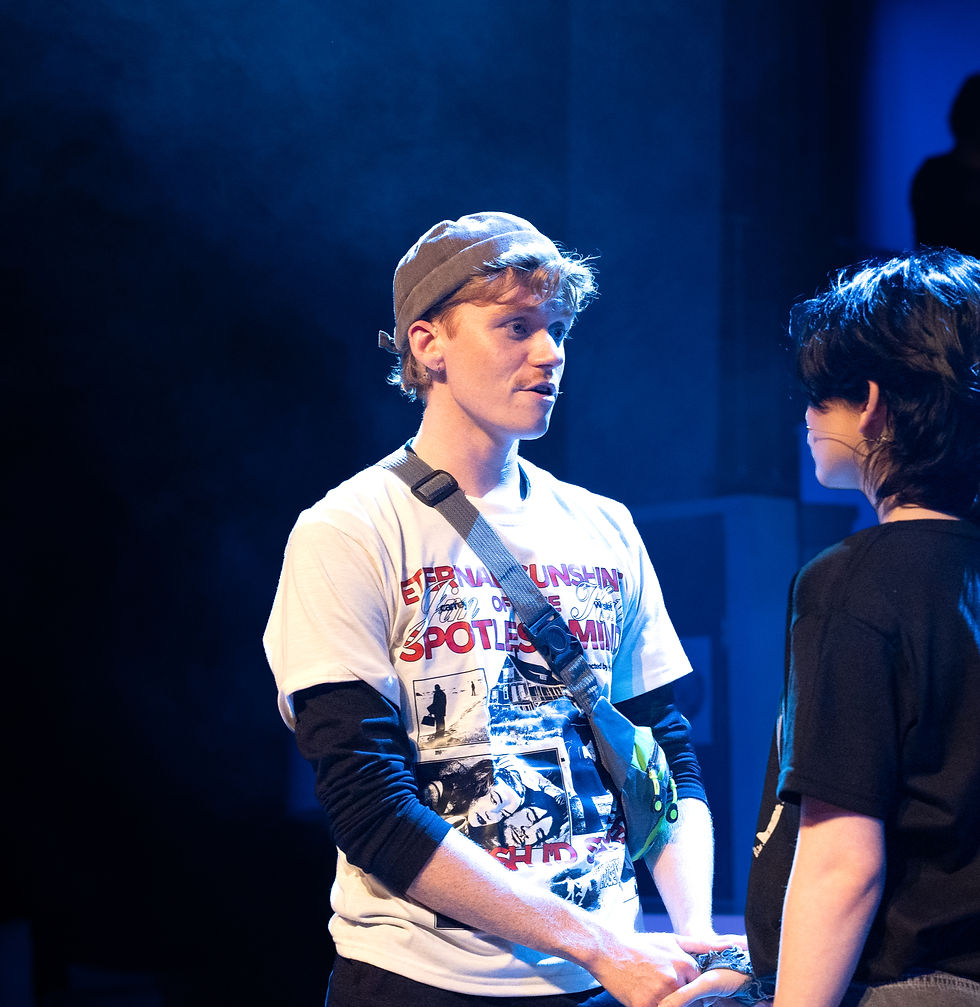
role purely as comic relief, but Morrison finds genuine warmth beneath Henry's laid-back exterior. His interactions with Natalie become some of the production's most grounded moments, offering a welcome counterpoint to the emotional turbulence surrounding the Goodman family. Morrison's Henry is patient, sincere and refreshingly uncomplicated, providing Natalie with the acceptance and stability she struggles to find elsewhere. Their chemistry feels authentic, allowing the relationship to develop naturally rather than simply functioning as a subplot.

As Gabe, Hugh Arthur faces the challenge of portraying a character who exists in a space between memory, reality and imagination. Arthur brings a magnetic energy to the role, demonstrating why Gabe exerts such influence over Diana's world. His performance balances confidence and charm with an underlying sense of unease, ensuring the character remains intriguing throughout. While some interpretations lean heavily into Gabe's darker qualities, Arthur's portrayal allows glimpses of the son and brother the family remembers, making his presence all the more emotionally complex. His vocal work is impressively strong, and he proves himself foundational to several of the production's most emotionally charged scenes.
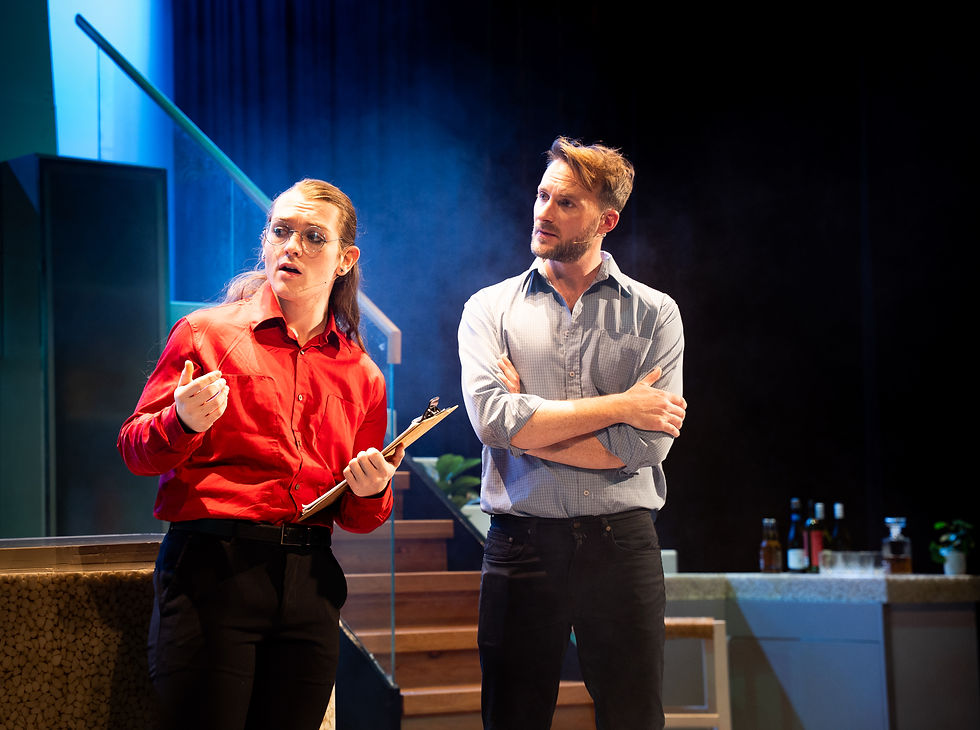
Brayden Macfarlane-Walker brings confidence and clarity to the dual roles of Dr Fine and Dr Madden, creating distinct and believable characters within Diana’s treatment journey. His assured stage presence and strong vocals provide a welcome sense of stability amidst the emotional turbulence of the Goodman family, while his nuanced characterisation highlights the changing approaches to Diana’s care.
Musically, the production is consistently strong. Under the direction of Tom Borbilas, the score retains the energy and emotional intensity that have made it so distinctive. The band supports the performers well, allowing the story to remain the focus while still delivering the power audiences expect from the rock-inspired score.
Visually, the production embraces simplicity. Alaska Jarvis’ design avoids unnecessary embellishment, trusting the strength of the material and the performers to carry the evening. This is supported well by Sarah Shanahan’s lighting design that artfully directs audience attention between the scenes that share space across the multilayered single set. All choices of set, costume, lighting and sound design are clearly committed to honouring the storytelling and work well to allow the performers to shine and the narrative to be the focus.
What remains most impressive, however, is Sydney Musical Theatre’s willingness to tackle such demanding subject matter. At a time when many companies are understandably drawn to safer programming choices, Next to Normal is a bold choice. It is a musical that asks audiences to think, to feel and, at times, to sit with discomfort.
It should also be noted that, in its commitment to fostering talent and ensuring peak performance at every show, Sydney Musical Theatre casts alternates who share the stage across the duration of the season. The aforementioned performers were those featured on the evening of this review; however, recognition should also go to Charli Arkle (Diana alternate), Raven Swinkels (principal Natalie & Gabe alternate), Brandon Alexander (Dan alternate) and Zion Lallana (Henry alternate).
Applause for a talented cast and an emotionally grounded interpretation of a challenging contemporary classic.
Afterthoughts that linger on the many ways grief shapes our lives—and how healing rarely looks the way we expect it to.
Next to Normal
9th - 26th July
Greenhalgh Theatre, Lindfield


Comments